
Master of Business Administration

Master of Business Administration

Offered at : Dubai Campus

Preparing Professionals for Dynamic Business Environments


The Master of Business Administration (MBA) at BITS Dubai is a postgraduate management course, which is designed to develop strong leadership, analytical and strategic decision-making skills. The curriculum is designed to offer rigorous classroom learning that covers core management disciplines such as marketing, finance, HR, operations as well as information systems. It also provides a structured industry exposure via a six month Practice School internship for real corporate experience. The MBA course equips students with practical knowledge and a global perspective, perfect for dynamic business environments, due to flexible scheduling and continuous industry interaction.


Design a Degree That Works for You


At BITS Pilani, your academic path is not Linear. It allow you to customise your learning path
according to your aspirations, goals and interest.

The structure of degree programmes and academic regulations also provides certain other flexibilities like choice of electives, number of electives, repetition of courses, departure from normal pace, withdrawal from or substitution of course(s), etc.

Students interested in exploring courses beyond the scope of their curriculum can opt to audit them. This option is for casual learners who are not enrolled in a degree programme.Courses such as Foreign Languages and Music are offered in addition to the core degree programmes. Students may take these courses on an audit basis, subject to the payment of additional fees.

High-performing students may transfer to:


Higher Degree or Ph.D. programmes


Between Ph.D. and Higher Degree levels (based on academic standing). This flexibility supports seamless progression for research-driven students.

One of the most popular flexibilities offered by our educational structure is the dual degree scheme, under which students concurrently work towards completing two integrated first degrees within a reasonable timeframe. All students admitted to Group B programmes are also eligible to work under this scheme for one of the Group A programmes. Assignments to programmes are made based on individual performance during the first year.


In the assignment of dual degrees, first priority is given to students in Group B seeking a second degree under this scheme from among the programmes in Group A. After fully satisfying the known needs of the first priority, a second operation is done to consider the other priority, namely, students in any group seeking a second degree from amongst the programmes in another group. While it would be academically and procedurally acceptable for a student admitted to Group A or B programmes to seek a second degree in Group C in the dual degree scheme, the reverse process is not normally possible. However, a student admitted to Group C will be eligible to compete for a dual degree in any degree in Group C, or any degree in Group B or MMS, but only in Group A.

Practice School
The Original Experiential Learning Model


The Practice School Programme is a hallmark of BITS Pilani’s experiential learning approach. It provides students with an opportunity to practice what they have learnt in global organisations under the supervision of a mentor. Students work on cutting-edge technologies and have the option to practice in their discipline of study or cross-disciplinary areas. In addition to providing students with an opportunity to play roles that require multifunctional skills, this flagship programme also offers many students the chance to secure a PPO.

Click the edit button to change this HTML

Practice School-I

Practice School I is an eight-week course conducted during the summer term after the second year of study. Students are stationed in an organisation during this programme, and after a comprehensive orientation, students largely learn through observation and work on group projects, under the guidance and mentorship of industry experts and a faculty member from BITS. This not only serves as a first exposure for students to the corporate world but also helps nurture their personality traits, communication, and presentation skills.

Practice School-II

Practice School-II offered in the final year of study is a TWENTY-TWO-week full-time program. First-degree students in their final year of study can register for this program either during the first semester or the second semester, and Dual-Degree students can register for a double-semester PS-II program. For higher degree students, the course is titled Practice School, and such students can register for it in their final semester of study.

Practice School Process

Practice School I is an eight-week course conducted during the summer term after the second year of study. Students are stationed in an organisation during this programme, and after a comprehensive orientation, students largely learn through observation and work on group projects, under the guidance and mentorship of industry experts and a faculty member from BITS. This not only serves as a first exposure for students to the corporate world but also helps nurture their personality traits, communication, and presentation skills.

Programme Structure

Focus: Developing strong management fundamentals and decision-making capabilities through systems thinking and business analytics.

Courses :

  • Organisational Theory & Behaviour
  • Strategic Marketing
  • Managerial Economics
  • Economic Environment of Business
  • Leading Modern Organisations
  • Introduction to Systems & Sustainability
  • Technology Innovation & Entrepreneurship
  • Business Statistics
  • Decision Making
  • Corporate Finance
  • Operations & Supply Chain Management
  • Consumer Behavior
  • Creating & Leading Entrepreneurial Organizations
  • Information & Knowledge Management Systems
  • Management Science
  • Elective

Focus: Strengthening strategic thinking, analytics and global business perspectives through advanced coursework, applied research and industry immersion.

Courses :

  • Human Resource Management
  • Critical and Design Thinking
  • Marketing Research & Metrics
  • Business Analytics
  • Strategic Management
  • International Business Strategy & Operations
  • Dissertation or Practice School
  • Elective IV

Faculty Advancing Contemporary Business Thinking

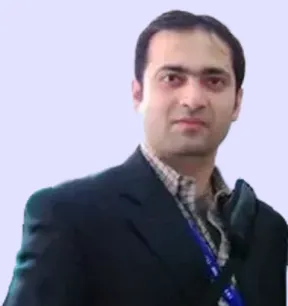
Dr. Aariz Faizan Javed


Assistant Professor,


Department of Management Studies

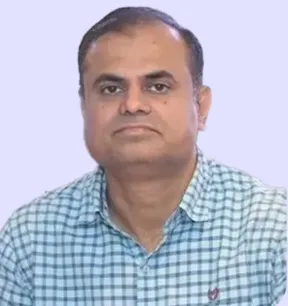
Dr. Aman Srivastava


Professor,


D Department of Management Studies.

Dr. Anurag Singh


Assistant Professor,


Department of Management Studies

Admissions: Everything You Need to Know


Students work hand-on in specialised, fully equipped facilities.

Admission Process

Eligibility Criteria

Fees & Refund Policy

Scholarship

Education Loan

Important Dates

FAQs

The MBA aims to develop business leaders with strong analytical ability, strategic thinking and managerial competence, preparing graduates to lead organizations in competitive, data-driven and global business environments.

The programme suits graduates seeking career transitions into management, leadership roles, consulting, analytics or entrepreneurship, especially those looking to combine technical understanding with strong business decision-making skills.

The MBA is a two-year, full-time programme structured across four semesters, combining core management courses, electives, case-based learning and practical industry exposure.

The curriculum covers finance, marketing, operations, human resources, strategy, business analytics, leadership development, electives, case studies and experiential learning through projects and internships.

Applicants must hold a recognized bachelor’s degree with at least 60% aggregate marks and have prior exposure to mathematics or statistics at the secondary or higher education level.

The MBA programme is offered at the Dubai campus under the Department of Management Studies.

Graduates pursue careers in consulting, analytics, marketing, finance, operations, project management, and leadership roles across technology, manufacturing, services and emerging business sectors.

Yes, the MBA also provides a pathway toward doctoral studies in management disciplines such as strategy, finance, marketing, analytics and organisational behavior.

Students gain industry exposure through structured internships, live projects, case competitions, guest lectures and interaction with corporate leaders and practitioners.

Salary varies by role and sector, with graduates securing competitive packages aligned with industry standards for entry-level management and business analytics positions.

Campus
Program Type
Content Type
Degree

MBA in Business Analytics

MBA in Business Analytics

Offered at: Dubai Campus

Building Analytics-Driven Leaders for the Digital Economy


The MBA in Business Analytics offered by BITS Pilani is a comprehensive graduate-level programme that provides students with the necessary skills to leverage data-driven methods for making appropriate decisions. It combines core management training with advanced quantitative modelling, analytical thinking and industry-oriented learning. The curriculum and experiential approach to the course offer opportunities for students to build technical skills and problem-solving ability. This will also develop a deeper understanding of how to analyse as well as interpret data from different contexts and apply those insights to a variety of industries.


Design a Degree That Works for You


At BITS Pilani, your academic path is not Linear. It allow you to customise your learning path
according to your aspirations, goals and interest.

The structure of degree programmes and academic regulations also provides certain other flexibilities like choice of electives, number of electives, repetition of courses, departure from normal pace, withdrawal from or substitution of course(s), etc.

Students interested in exploring courses beyond the scope of their curriculum can opt to audit them. This option is for casual learners who are not enrolled in a degree programme.Courses such as Foreign Languages and Music are offered in addition to the core degree programmes. Students may take these courses on an audit basis, subject to the payment of additional fees.

High-performing students may transfer to:


Higher Degree or Ph.D. programmes


Between Ph.D. and Higher Degree levels (based on academic standing). This flexibility supports seamless progression for research-driven students.

One of the most popular flexibilities offered by our educational structure is the dual degree scheme, under which students concurrently work towards completing two integrated first degrees within a reasonable timeframe. All students admitted to Group B programmes are also eligible to work under this scheme for one of the Group A programmes. Assignments to programmes are made based on individual performance during the first year.


In the assignment of dual degrees, first priority is given to students in Group B seeking a second degree under this scheme from among the programmes in Group A. After fully satisfying the known needs of the first priority, a second operation is done to consider the other priority, namely, students in any group seeking a second degree from amongst the programmes in another group. While it would be academically and procedurally acceptable for a student admitted to Group A or B programmes to seek a second degree in Group C in the dual degree scheme, the reverse process is not normally possible. However, a student admitted to Group C will be eligible to compete for a dual degree in any degree in Group C, or any degree in Group B or MMS, but only in Group A.

Practice School
The Original Experiential Learning Model


The Practice School Programme is a hallmark of BITS Pilani’s experiential learning approach. It provides students with an opportunity to practice what they have learnt in global organisations under the supervision of a mentor. Students work on cutting-edge technologies and have the option to practice in their discipline of study or cross-disciplinary areas. In addition to providing students with an opportunity to play roles that require multifunctional skills, this flagship programme also offers many students the chance to secure a PPO.

Click the edit button to change this HTML

Practice School-I

Practice School I is an eight-week course conducted during the summer term after the second year of study. Students are stationed in an organisation during this programme, and after a comprehensive orientation, students largely learn through observation and work on group projects, under the guidance and mentorship of industry experts and a faculty member from BITS. This not only serves as a first exposure for students to the corporate world but also helps nurture their personality traits, communication, and presentation skills.

Practice School-II

Practice School-II offered in the final year of study is a TWENTY-TWO-week full-time program. First-degree students in their final year of study can register for this program either during the first semester or the second semester, and Dual-Degree students can register for a double-semester PS-II program. For higher degree students, the course is titled Practice School, and such students can register for it in their final semester of study.

Practice School Process

Practice School I is an eight-week course conducted during the summer term after the second year of study. Students are stationed in an organisation during this programme, and after a comprehensive orientation, students largely learn through observation and work on group projects, under the guidance and mentorship of industry experts and a faculty member from BITS. This not only serves as a first exposure for students to the corporate world but also helps nurture their personality traits, communication, and presentation skills.

Programme Structure

Focus:Building strong foundations in management principles and analytical techniques, integrating economics, finance, operations, data management and predictive analytics for data-driven decision-making.

Courses :

  • Managerial Economics
  • Strategic Management
  • Financial Statement Analysis & Reporting
  • Corporate Finance
  • Marketing Management
  • Operations & Supply Chain Management
  • Managing People & Organization
  • Statistics & Basic Econometrics
  • Programming for Analytics
  • Data Management and Warehousing
  • Data Visualisation, Ethics and Data Privacy
  • Time Series Analysis and Forecasting
  • Predictive Analytics
  • Elective Pool I

Focus:Advancing expertise in deep learning and prescriptive analytics, while applying analytical skills through research or industry immersion and specialised electives.

Courses :

  • Deep Learning for Business
  • Prescriptive Analytics with Mathematical Programming
  • Dissertation or Practice School
  • Elective Pool I & II

Cutting-Edge Research Labs Shaping the Future of Biotechnology

Molecular Biology Lab (MBL)

Bioinformatics Research Lab

Software Defined Networking Laboratory

Microscopy Room

Green House Lab

Vector Biology (Insectary) Research Lab

Learn From Faculty With Sharp Business Analytics Instinct

Dr. Aariz Faizan Javed


Assistant Professor,


Department of Management Studies

Dr. Aman Srivastava


Professor,


Department of Management Studies

Dr. Anurag Singh


Assistant Professor,


Department of Management Studies

Admissions: Everything You Need to Know


Students work hand-on in specialised, fully equipped facilities.

Admission Process

Eligibility Criteria

Fees & Refund Policy

Scholarship

Education Loan

Important Dates

FAQs

Core courses include business analytics, statistics, predictive modelling, data visualisation, optimisation, machine learning basics and management courses like finance, marketing and strategy.

Applicants must hold a bachelor’s degree (minimum three years) with at least 60% aggregate and have studied mathematics/statistics at 10+2 or higher level.

This MBA in Business Analytics is primarily offered on campus at BITS Pilani, Dubai campus, under the Management Studies department.

It equips students with data-driven decision-making skills using analytics, statistics, predictive modelling, technology and business strategy to solve real organisational problems across functional domains.

This MBA emphasises analytics, data modelling and technology integrated with core management principles, unlike generic MBAs that focus broadly on business functions without strong analytics depth.

The MBA in Business Analytics is a full-time, two-year programme typically divided into four semesters with classroom, practical and industry exposure.

Graduates work as business analysts, data analysts, analytics consultants, strategy analysts, operations analysts and data-science informed managers in varied sectors.

Graduates often command competitive packages, with average salaries around industry benchmarks for analytics MBAs (often ₹14–18 LPA in India).

Post-MBA options include PhD in analytics or management, specialised certifications or advanced tech-analytics programmes aligned with industry trends.

The programme includes structured industry internships (Practice School), giving real project exposure and analytics implementation experience.

Campus
Program Type
Content Type
Degree

M.E. Civil in Infrastructure Engineering and Management

M.E.Civil

Infrastructure Engineering and Management


Offered at: Dubai Campus

Advanced Infrastructure Engineering and Management Studies


The M.E. (Civil with Specialisation in Infrastructure Engineering and Management) at BITS Pilani, Dubai Campus is a two year postgraduate course. It equips students with advanced knowledge in the design, planning, construction, maintenance as well as management of infrastructure systems across diverse civil engineering sectors. The programme curriculum amalgamates core and elective courses on infrastructure planning and management, transportation systems, water resources as well as construction management along with research practice and dissertation work. It helps students to prepare for creating and managing complex infrastructure projects while addressing modern challenges.


Design a Degree That Works for You


At BITS Pilani, your academic path is not Linear. It allows you to customise your learning path
according to your aspirations, goals and interest.

One of the most popular flexibilities offered by our educational structure is the dual degree scheme, under which students concurrently work towards completing two integrated first degrees within a reasonable timeframe. All students admitted to Group B programmes are also eligible to work under this scheme for one of the Group A programmes. Assignments to programmes are made based on individual performance during the first year.




In the assignment of dual degrees, first priority is given to students in Group B seeking a second degree under this scheme from among the programmes in Group A. After fully satisfying the known needs of the first priority, a second operation is done to consider the other priority, namely, students in any group seeking a second degree from amongst the programmes in another group. While it would be academically and procedurally acceptable for a student admitted to Group A or B programmes to seek a second degree in Group C in the dual degree scheme, the reverse process is not normally possible. However, a student admitted to Group C will be eligible to compete for a dual degree in any degree in Group C, or any degree in Group B or MMS, but only in Group A.

High-performing students may transfer to:


Higher Degree or Ph.D. programmes


Between Ph.D. and Higher Degree levels (based on academic standing). This flexibility supports seamless progression for research-driven students.

Students interested in exploring courses beyond the scope of their curriculum can opt to audit them. This option is for casual learners who are not enrolled in a degree programme.Courses such as Foreign Languages and Music are offered in addition to the core degree programmes. Students may take these courses on an audit basis, subject to the payment of additional fees.

The structure of degree programmes and academic regulations also provides certain other flexibilities like choice of electives, number of electives, repetition of courses, departure from normal pace, withdrawal from or substitution of course(s), etc.

Practice School
The Original Experiential Learning Model


The Practice School Programme is a hallmark of BITS Pilani’s experiential learning approach. It provides students with an opportunity to practice what they have learnt in global organisations under the supervision of a mentor. Students work on cutting-edge technologies and have the option to practice in their discipline of study or cross-disciplinary areas. In addition to providing students with an opportunity to play roles that require multifunctional skills, this flagship programme also offers many students the chance to secure a PPO.

Click the edit button to change this HTML

Practice School-I

Practice School I is an eight-week course conducted during the summer term after the second year of study. Students are stationed in an organisation during this programme, and after a comprehensive orientation, students largely learn through observation and work on group projects, under the guidance and mentorship of industry experts and a faculty member from BITS. This not only serves as a first exposure for students to the corporate world but also helps nurture their personality traits, communication, and presentation skills.

Practice School-II

Practice School-II offered in the final year of study is a TWENTY-TWO-week full-time program. First-degree students in their final year of study can register for this program either during the first semester or the second semester, and Dual-Degree students can register for a double-semester PS-II program. For higher degree students, the course is titled Practice School, and such students can register for it in their final semester of study.

Practice School Process

Practice School I is an eight-week course conducted during the summer term after the second year of study. Students are stationed in an organisation during this programme, and after a comprehensive orientation, students largely learn through observation and work on group projects, under the guidance and mentorship of industry experts and a faculty member from BITS. This not only serves as a first exposure for students to the corporate world but also helps nurture their personality traits, communication, and presentation skills.

Programme Structure

Focus: Building a strong foundation in systems thinking and infrastructure planning, while developing an understanding of transportation networks, water resources and construction management principles.

Courses:

  • Fundamentals of Systems
  • Transportation Systems Planning and Management
  • Water Resources Planning and Management
  • Construction Management
  • Research Practice
  • Infrastructure Planning and Management
  • Electives

Focus: Deepening expertise through specialised electives, applied research and industry-oriented learning experiences.

Courses :

  • Electives
  • Dissertation
  • Practice School

Faculty Bridging Engineering, Planning and Management

Dr. Akshay Venkateshwaran


Assistant Professor,


Department of Civil and Architectural Engineering

Dr. Brij Kishor Pandey


Assistant Professor,


Head of Department, Department of Civil and Architectural Engineering

Dr. Deepthi Mary Dilip


Assistant Professor,


Department of Civil and Architectural Engineering

Admissions: Everything You Need to Know


Students work hand-on in specialised, fully equipped facilities.

Admission Process

Eligibility Criteria

Fees & Refund Policy

Scholarship

Education Loan

Important Dates

FAQs

The M.E. Civil (Infrastructure Engineering & Management) programme spans 2 years (4 semesters) of full-time study.

You’ll study transportation systems, infrastructure planning, water resources management, construction management, research practice, electives and a dissertation or Practice School.

The programme advances infrastructure planning, design, construction, maintenance and management with emphasis on sustainability, economics, transportation systems, water resources and research-based problem solving.

This M.E. is a postgraduate degree focusing on specialized infrastructure systems and management, unlike B.E., which builds broad undergraduate civil engineering foundations.

Applicants need a relevant bachelor’s in engineering (Civil or related) with a minimum aggregate (~60%) and may require an admission test/interview.

This M.E. Civil (Infrastructure Engineering & Management) is offered at BITS Pilani, Dubai Campus under the Civil Engineering department.

Graduates can work in infrastructure planning, project management, transportation, water systems, construction management, consulting and sustainable development roles.

Postgraduate civil graduates typically earn competitive salaries in infrastructure, construction, planning, and consulting, varying by region, skills and employer.

Graduates can pursue Ph.D., research roles or advanced professional certifications in infrastructure, engineering management, urban planning or sustainability.

Students may participate in Practice School internships or project-based training integrated into the curriculum for real-world experience.

Campus
Program Type
Content Type
Degree

M.E. Electrical in Power Electronics & Drives

M.E. Electrical

Power Electronics and Drives


Offered at: Dubai

Powering Tomorrow’s Intelligent Electric Systems


The M.E. Electrical in Power Electronics and Drives at BITS Pilani, Dubai Campus is an advanced two-year programme in modern electrical engineering. It is structured upon experiential learning with an exposure to advanced systems constrained by power electronic converters, electric machines, adjustable-speed drives and system simulations. The programme combines a theoretical base with simulation-based learning and industry-leading projects that allow students to develop strong analytical and problem-solving skills. Upon graduation, the learners are ready as technically able professionals to design, optimise and manage systems for energy-efficient applications for power generation, industrial automation, renewable energy and research promoting a sustainable technological development across global industries.


Design a Degree That Works for You


At BITS Pilani, your academic path is not Linear. It allow you to customise your learning path
according to your aspirations, goals and interest.

The structure of degree programmes and academic regulations also provides certain other flexibilities like choice of electives, number of electives, repetition of courses, departure from normal pace, withdrawal from or substitution of course(s), etc.

Students interested in exploring courses beyond the scope of their curriculum can opt to audit them. This option is for casual learners who are not enrolled in a degree programme.Courses such as Foreign Languages and Music are offered in addition to the core degree programmes. Students may take these courses on an audit basis, subject to the payment of additional fees.

High-performing students may transfer to:


Higher Degree or Ph.D. programmes


Between Ph.D. and Higher Degree levels (based on academic standing). This flexibility supports seamless progression for research-driven students.

One of the most popular flexibilities offered by our educational structure is the dual degree scheme, under which students concurrently work towards completing two integrated first degrees within a reasonable timeframe. All students admitted to Group B programmes are also eligible to work under this scheme for one of the Group A programmes. Assignments to programmes are made based on individual performance during the first year.


In the assignment of dual degrees, first priority is given to students in Group B seeking a second degree under this scheme from among the programmes in Group A. After fully satisfying the known needs of the first priority, a second operation is done to consider the other priority, namely, students in any group seeking a second degree from amongst the programmes in another group. While it would be academically and procedurally acceptable for a student admitted to Group A or B programmes to seek a second degree in Group C in the dual degree scheme, the reverse process is not normally possible. However, a student admitted to Group C will be eligible to compete for a dual degree in any degree in Group C, or any degree in Group B or MMS, but only in Group A.

Practice School
The Original Experiential Learning Model


The Practice School Programme is a hallmark of BITS Pilani’s experiential learning approach. It provides students with an opportunity to practice what they have learnt in global organisations under the supervision of a mentor. Students work on cutting-edge technologies and have the option to practice in their discipline of study or cross-disciplinary areas. In addition to providing students with an opportunity to play roles that require multifunctional skills, this flagship programme also offers many students the chance to secure a PPO.

Click the edit button to change this HTML

Practice School-I

Practice School I is an eight-week course conducted during the summer term after the second year of study. Students are stationed in an organisation during this programme, and after a comprehensive orientation, students largely learn through observation and work on group projects, under the guidance and mentorship of industry experts and a faculty member from BITS. This not only serves as a first exposure for students to the corporate world but also helps nurture their personality traits, communication, and presentation skills.

Practice School-II

Practice School-II offered in the final year of study is a TWENTY-TWO-week full-time program. First-degree students in their final year of study can register for this program either during the first semester or the second semester, and Dual-Degree students can register for a double-semester PS-II program. For higher degree students, the course is titled Practice School, and such students can register for it in their final semester of study.

Practice School Process

Practice School I is an eight-week course conducted during the summer term after the second year of study. Students are stationed in an organisation during this programme, and after a comprehensive orientation, students largely learn through observation and work on group projects, under the guidance and mentorship of industry experts and a faculty member from BITS. This not only serves as a first exposure for students to the corporate world but also helps nurture their personality traits, communication, and presentation skills.

Programme Structure

Focus: Building strong fundamentals in power electronics, electrical distribution systems, and device-level understanding, while introducing research and control systems essential to advanced electrical engineering practice.

Courses:

  • Power Electronics Converter
  • Distribution Apparatus and Configuration
  • Power Devices: Microelectronics and Selection
  • Elective
  • Research Practice
  • Control and Instrumentation Systems
  • Solid State Drives
  • Elective

Focus: Strengthening system-level expertise through simulation and specialised electives, while applying knowledge to real-world problems via dissertation research or immersive industry practice.

Courses:

  • System Simulation
  • Electives
  • Dissertation / Practice School

Learn from Academically Accomplished Electrical Engineering Faculty

Ashwani Saini


Sr. Lab Instructor,


Department of Electrical and Electronics Engineering

Chelladurai C


Sr. Lab Instructor,


Department of Electrical and Electronics Engineering

Dr. Abdul Rajak A.R.


Assistant Professor,

Head of Department,


Department of Electrical and Electronics

Admissions: Everything You Need to Know


Students work hand-on in specialised, fully equipped facilities.

Admission Process

Eligibility Criteria

Fees & Refund Policy

Scholarship

Education Loan

Important Dates

FAQs

At BITS Pilani, this master’s explores contemporary media and communication- combining theory with hands-on practice to analyse how media works and how impactful content is created.

It’s a two-year (four-semester) Higher Degree at BITS Pilani; the final semester is devoted to either a full-time Practice School (PS-II) or a Dissertation. A three-semester completion pathway exists via early dissertation start.

You’ll study Business Communication, Introduction to Mass Communication, Reporting & Writing for Media, Creative Writing, Effective Public Speaking, Current Affairs, and more at BITS Pilani.

Yes. BITS Pilani includes Language Lab Practice, Mass Media Content & Design, Computer-Mediated Communication and Short Film & Video Production.

In the final semester, BITS Pilani lets you choose PS-II—an intensive, six-month, credit-bearing industry assignment- integrated into the degree.

Applications are through BITS Pilani’s Higher Degree (HD) portal. Programme-wise eligibility and selection modality are published each cycle in the official HD brochure (see Annexure-I).

The stream is offered at the Dubai campus of BITS Pilani, under the Department of Humanities & Social Sciences.

Yes. BITS Pilani allows either PS-II (20 units) or Thesis (units split across terms) in the final stage- pick what fits your goals.

BITS Pilani runs an institute-wide placement process and reports strong activity- 200+ summer interns and 250+ PPOs in recent cycles, alongside regular recruiter drives.

Graduates from BITS Pilani commonly move into content creation & strategy, journalism, corporate communications, PR, social/digital media and media analytics- aligned with the programme’s reporting, media design, CMC and short-film coursework.

Campus
Program Type
Content Type
Degree
Departments

Higher Degree

Higher Degree (PG)

Research-driven | Advanced | Globally relevant

Advanced Learning for Bigger Ambitions

The Higher Degree programmes at BITS (such as M.E., M.Pharm. and MBA) are designed to deepen academic knowledge, strengthen research ability and increase professional capability.

By integrating academic coursework with practical industry and/or research experience, the Higher Degree programmes enable students to develop expertise, innovate and add value to their fields.

Research-intensive by Design

Students engage deeply with projects that address pressing challenges under the supervision of expert faculty and are also supported by advanced laboratories and research infrastructure.

Advanced. Applied. Impactful.

Unlike traditional postgraduate programmes, BITS Higher Degrees merge advanced learning with research and practice that allow students to translate knowledge into meaningful outcomes.

Industry-Connected. Globally Relevant.

With practice-school, collaborative projects and tie-ups with the world's best organisations, students gain industry exposure and a global outlook to lead across disciplines.

Find What Moves You

Start Your Journey

Explore important dates, eligibility criteria and
application details for BITSAT.

Program Type

M.E. Biotechnology

M.E.

Biotechnology


Offered at Pilani, KK Birla Goa, Hyderabad

Pushing the Frontier of Life Sciences Innovation


The M.E. (Biotechnology) programme at BITS Pilani’s Department of Biological Sciences incorporates innovative research with practical experience in the vital fields of molecular biology, bioengineering and industrial biotechnology. Students are involved in high-level projects that explore synthetic biology, bioinformatics and microbial/plant systems under the guidance of faculty supervision. The curriculum develops students' abilities in technology translation, regulatory frameworks, sustainability, education and industry partners. Graduates of this programme are well trained to adapt and take on leadership positions within biotechnology industries, regulatory agencies, academic research or entrepreneurial activities around the globe.


Design a Degree That Works for You


At BITS Pilani, your academic path is not Linear. It allow you to customise your learning path
according to your aspirations, goals and interest.

The structure of degree programmes and academic regulations also provides certain other flexibilities like choice of electives, number of electives, repetition of courses, departure from normal pace, withdrawal from or substitution of course(s), etc.

Students interested in exploring courses beyond the scope of their curriculum can opt to audit them. This option is for casual learners who are not enrolled in a degree programme.Courses such as Foreign Languages and Music are offered in addition to the core degree programmes. Students may take these courses on an audit basis, subject to the payment of additional fees.

High-performing students may transfer to:


Higher Degree or Ph.D. programmes


Between Ph.D. and Higher Degree levels (based on academic standing). This flexibility supports seamless progression for research-driven students.

One of the most popular flexibilities offered by our educational structure is the dual degree scheme, under which students concurrently work towards completing two integrated first degrees within a reasonable timeframe. All students admitted to Group B programmes are also eligible to work under this scheme for one of the Group A programmes. Assignments to programmes are made based on individual performance during the first year.


In the assignment of dual degrees, first priority is given to students in Group B seeking a second degree under this scheme from among the programmes in Group A. After fully satisfying the known needs of the first priority, a second operation is done to consider the other priority, namely, students in any group seeking a second degree from amongst the programmes in another group. While it would be academically and procedurally acceptable for a student admitted to Group A or B programmes to seek a second degree in Group C in the dual degree scheme, the reverse process is not normally possible. However, a student admitted to Group C will be eligible to compete for a dual degree in any degree in Group C, or any degree in Group B or MMS, but only in Group A.

Practice School
The Original Experiential Learning Model


The Practice School Programme is a hallmark of BITS Pilani’s experiential learning approach. It provides students with an opportunity to practice what they have learnt in global organisations under the supervision of a mentor. Students work on cutting-edge technologies and have the option to practice in their discipline of study or cross-disciplinary areas. In addition to providing students with an opportunity to play roles that require multifunctional skills, this flagship programme also offers many students the chance to secure a PPO.

Click the edit button to change this HTML

Practice School-I

Practice School I is an eight-week course conducted during the summer term after the second year of study. Students are stationed in an organisation during this programme, and after a comprehensive orientation, students largely learn through observation and work on group projects, under the guidance and mentorship of industry experts and a faculty member from BITS. This not only serves as a first exposure for students to the corporate world but also helps nurture their personality traits, communication, and presentation skills.

Practice School-II

Practice School-II offered in the final year of study is a TWENTY-TWO-week full-time program. First-degree students in their final year of study can register for this program either during the first semester or the second semester, and Dual-Degree students can register for a double-semester PS-II program. For higher degree students, the course is titled Practice School, and such students can register for it in their final semester of study.

Practice School Process

Practice School I is an eight-week course conducted during the summer term after the second year of study. Students are stationed in an organisation during this programme, and after a comprehensive orientation, students largely learn through observation and work on group projects, under the guidance and mentorship of industry experts and a faculty member from BITS. This not only serves as a first exposure for students to the corporate world but also helps nurture their personality traits, communication, and presentation skills.

Programme Structure

Focus: Developing strong foundations in molecular biology, genetic engineering and biotechnological applications across plant and animal systems.

Courses :

  • Molecular Mechanism of Gene Expression
  • Advanced Cell and Molecular Biology
  • Environmental Biotechnology and Waste Management
  • Animal Cell Technology
  • Plant Biotechnology
  • Elective
  • Research Practice

Focus: Applying advanced microbiological and biotechnological techniques through research and professional practice.

Courses :

  • Advanced and Applied Microbiology
  • Elective
  • Dissertation
  • Practice School

Faculty Shaping the Future of Biotechnology and Genetic Engineering

Anasuya Ganguly


Professor

Angshuman Sarkar


Professor

Aryamav Pattnaik


Assistant Professor

Admissions: Everything You Need to Know


Students work hand-on in specialised, fully equipped facilities.

Admission Process

Eligibility Criteria

Fees & Refund Policy

Scholarship

Education Loan

Important Dates

You Asked.
We Answered.

At BITS Pilani, M.E. Biotechnology builds advanced capability in molecular/cellular biology, environmental biotechnology, bioprocessing and modern electives—preparing you for research or industry roles with a strong practical spine.

It’s a two-year (four-semester) higher-degree at BITS Pilani: three semesters of coursework and research practice, followed by a full-time final semester as either Practice School (industry) or Dissertation.

You’ll study Molecular Mechanism of Gene Expression, Advanced Cell & Molecular Biology, Environmental Biotechnology & Waste Management, Advanced & Applied Microbiology, plus discipline electives such as Recombinant DNA Technology and Biochemical Engineering at BITS Pilani.

Yes- BITS Pilani supports biotechnology research with department labs and central facilities (CAL/CSIF) housing instruments commonly used in bio/chem research (e.g., HPLC, GC, LC-MS, spectro-fluorimeters), accessible across campuses.

Higher-degree students at BITS Pilani may opt for Practice School-II—a five-and-a-half-month, 20-unit, full-time, credit-bearing industry assignment run year-round with defined outcomes and mentoring.

For BITS Pilani Higher-Degree admissions, minimum eligibility is 60% in the qualifying degree. Selection is merit-based via the BITS HD test and/or a valid GATE score, as notified each cycle.

M.E. Biotechnology is offered at Pilani, K K Birla Goa and Hyderabad campuses under the life sciences/biological sciences ecosystem.

Absolutely. BITS Pilani lets you pick from an extensive elective basket (e.g., Biomolecular Modelling, Stem Cell & Regenerative Biology, Bioethics & Biosafety, Cancer Biology) and choose Practice School or Dissertation in the final term.

Common first roles include bioprocess engineer, analytical scientist, QA associate, regulatory affairs associate and data/biotech analyst- built on the programme’s core labs and electives.

BITS Pilani runs an institute-wide, structured placement process with strong recruiter participation across seasons; the Practice School ecosystem often supports smooth transitions into roles and pre-placement offers.

Program Type
Content Type
Degree

M.E. in Civil Specialisation in Transportation Engineering

M.E. Civil

Transportation Engineering


Offered at: Pilani, Hyderabad

Driving Innovation in Civil and Transportation Systems


Since its inception, BITS Pilani’s Department of Civil Engineering has developed engineering talent from various disciplines, while the M.E. in Civil Specialisation in Transportation Engineering builds on this legacy. The programme offers students an opportunity to understand and study traffic flow, pavement design, transport planning, highway engineering and sustainable mobility at a more advanced level. The course consists of a balanced blend of an in-depth theoretical understanding coupled with cutting-edge laboratory projects and field-based practical projects. This combination provides graduates with the knowledge and practical experience to address the challenges that exist in urban transport network systems, highway systems and intelligent mobility options. The curriculum is closely aligned to international standards and industry relevance, which is why graduates become successful working in consultancy firms, infrastructure agencies and design-engineering firms around the world.


Design a Degree That Works for You


At BITS Pilani, your academic path is not Linear. It allow you to customise your learning path
according to your aspirations, goals and interest.

The structure of degree programmes and academic regulations also provides certain other flexibilities like choice of electives, number of electives, repetition of courses, departure from normal pace, withdrawal from or substitution of course(s), etc.

Students interested in exploring courses beyond the scope of their curriculum can opt to audit them. This option is for casual learners who are not enrolled in a degree programme.Courses such as Foreign Languages and Music are offered in addition to the core degree programmes. Students may take these courses on an audit basis, subject to the payment of additional fees.

High-performing students may transfer to:


Higher Degree or Ph.D. programmes


Between Ph.D. and Higher Degree levels (based on academic standing). This flexibility supports seamless progression for research-driven students.

One of the most popular flexibilities offered by our educational structure is the dual degree scheme, under which students concurrently work towards completing two integrated first degrees within a reasonable timeframe. All students admitted to Group B programmes are also eligible to work under this scheme for one of the Group A programmes. Assignments to programmes are made based on individual performance during the first year.


In the assignment of dual degrees, first priority is given to students in Group B seeking a second degree under this scheme from among the programmes in Group A. After fully satisfying the known needs of the first priority, a second operation is done to consider the other priority, namely, students in any group seeking a second degree from amongst the programmes in another group. While it would be academically and procedurally acceptable for a student admitted to Group A or B programmes to seek a second degree in Group C in the dual degree scheme, the reverse process is not normally possible. However, a student admitted to Group C will be eligible to compete for a dual degree in any degree in Group C, or any degree in Group B or MMS, but only in Group A.

Practice School
The Original Experiential Learning Model


The Practice School Programme is a hallmark of BITS Pilani’s experiential learning approach. It provides students with an opportunity to practice what they have learnt in global organisations under the supervision of a mentor. Students work on cutting-edge technologies and have the option to practice in their discipline of study or cross-disciplinary areas. In addition to providing students with an opportunity to play roles that require multifunctional skills, this flagship programme also offers many students the chance to secure a PPO.

Click the edit button to change this HTML

Practice School-I

Practice School I is an eight-week course conducted during the summer term after the second year of study. Students are stationed in an organisation during this programme, and after a comprehensive orientation, students largely learn through observation and work on group projects, under the guidance and mentorship of industry experts and a faculty member from BITS. This not only serves as a first exposure for students to the corporate world but also helps nurture their personality traits, communication, and presentation skills.

Practice School-II

Practice School-II offered in the final year of study is a TWENTY-TWO-week full-time program. First-degree students in their final year of study can register for this program either during the first semester or the second semester, and Dual-Degree students can register for a double-semester PS-II program. For higher degree students, the course is titled Practice School, and such students can register for it in their final semester of study.

Practice School Process

Practice School I is an eight-week course conducted during the summer term after the second year of study. Students are stationed in an organisation during this programme, and after a comprehensive orientation, students largely learn through observation and work on group projects, under the guidance and mentorship of industry experts and a faculty member from BITS. This not only serves as a first exposure for students to the corporate world but also helps nurture their personality traits, communication, and presentation skills.

Programme Structure

Focus: Fundamentals of transportation systems, design concepts, planning methods and material characterisation.

Courses :

  • Transportation Planning
  • Pavement Material Characterisation
  • Highway Design
  • Traffic Systems Analysis
  • Pavement Analysis and Design
  • Public Transportation
  • Research Practice
  • Elective

Focus: Integration of advanced design, research methodologies, and real-world exposure through electives and professional practice.

Courses :

  • Dissertation
  • Electives (4 Courses)
  • Practice School

Get Guidance by the Pioneers of Civil Engineering Excellence

Dr. Akshay Venkateshwaran


Assistant Professor,
Department of Civil and Architectural Engineering

Dr. Brij Kishor Pandey


Assistant Professor,
Head of Department, Department of Civil and Architectural Engineering

Dr. Deepthi Mary Dilip


Assistant Professor,
Department of Civil and Architectural Engineering

Admissions: Everything You Need to Know


Students work hand-on in specialised, fully equipped facilities.

Admission Process

Eligibility Criteria

Fees & Refund Policy

Scholarship

Education Loan

Importants Dates

You Asked.
We Answered.

At BITS Pilani, M.E. Civil (Transportation Engineering) develops expertise in traffic engineering, highway/pavement design, transportation systems planning and data-driven mobility, blending theory, computation and projects.

It’s a two-year, four-semester higher-degree at BITS Pilani: three semesters of coursework followed by a full-time final semester as either Practice School (PS-II) or Dissertation; a 3-semester completion path is possible via early dissertation start.

At BITS Pilani, you’ll study Highway Design, Pavement Materials & Characterisation, Pavement Analysis & Design, Traffic System Analysis and electives like Transportation Data Analytics and Road Asset Management.

Yes- Civil Engineering at BITS Pilani supports transport coursework with department labs/facilities and computational tools used in analysis and design projects.

Higher-degree students at BITS Pilani can opt for PS-II in the final term—a 5.5–6 month, credit-bearing, full-time industry assignment with defined outcomes and mentorship.

For BITS Pilani Higher-Degree admissions, a minimum 60% in the qualifying degree is required; selection is merit-based via the BITS HD test and/or a valid GATE score (as notified each cycle). Financial assistance (stipend/fee waiver) is described in the current notice.

M.E. Civil (Transportation Engineering) is offered under Civil Engineering at BITS Pilani—listed at the Pilani campus and run at Hyderabad as well.

Absolutely. BITS Pilani lets you choose domain electives (e.g., Transportation Economics, Highway Construction Technology, Pavement Rehabilitation, Transportation Data Analytics) and pick PS-II or Dissertation to match your goals.

Graduates from BITS Pilani move into transportation planning/consulting, traffic operations and safety, pavement/highway engineering, urban mobility and GIS/analytics roles—well aligned to the curriculum and PS/Dissertation choices.

BITS Pilani follows an institute-wide placement process with strong recruiter participation across seasons; PS-II often strengthens outcomes and can lead to PPOs.

Campus
Program Type
Content Type
Degree

M.E. in Computer Science with a specialisation in Information Security with BSc Input

M.E.

Computer Science in Information Security with B.Sc. Input


Offered at: Pilani

Empowering Innovators in Cybersecurity and Information Systems


The M.E. in Computer Science with a specialisation in Information Security at BITS Pilani prepares students to become leaders in cyber-security, cryptography, network defence and secure systems design. Through a rigorous curriculum, students engage in hands-on research, real-world security challenges and interdisciplinary projects spanning threat analysis, ethical hacking, data protection and compliance frameworks. The programme emphasises global standards of security, privacy and quality, equipping graduates to pursue careers in security engineering, risk management, government agencies and technology firms worldwide. With BITS Pilani’s legacy of innovation and academic excellence, students emerge as well-rounded professionals ready to safeguard tomorrow’s digital enterprise.


Design a Degree That Works for You


At BITS Pilani, your academic path is not Linear. It allow you to customise your learning path
according to your aspirations, goals and interest.

The structure of degree programmes and academic regulations also provides certain other flexibilities like choice of electives, number of electives, repetition of courses, departure from normal pace, withdrawal from or substitution of course(s), etc.

Students interested in exploring courses beyond the scope of their curriculum can opt to audit them. This option is for casual learners who are not enrolled in a degree programme.Courses such as Foreign Languages and Music are offered in addition to the core degree programmes. Students may take these courses on an audit basis, subject to the payment of additional fees.

High-performing students may transfer to:


Higher Degree or Ph.D. programmes


Between Ph.D. and Higher Degree levels (based on academic standing). This flexibility supports seamless progression for research-driven students.

One of the most popular flexibilities offered by our educational structure is the dual degree scheme, under which students concurrently work towards completing two integrated first degrees within a reasonable timeframe. All students admitted to Group B programmes are also eligible to work under this scheme for one of the Group A programmes. Assignments to programmes are made based on individual performance during the first year.


In the assignment of dual degrees, first priority is given to students in Group B seeking a second degree under this scheme from among the programmes in Group A. After fully satisfying the known needs of the first priority, a second operation is done to consider the other priority, namely, students in any group seeking a second degree from amongst the programmes in another group. While it would be academically and procedurally acceptable for a student admitted to Group A or B programmes to seek a second degree in Group C in the dual degree scheme, the reverse process is not normally possible. However, a student admitted to Group C will be eligible to compete for a dual degree in any degree in Group C, or any degree in Group B or MMS, but only in Group A.

Practice School
The Original Experiential Learning Model


The Practice School Programme is a hallmark of BITS Pilani’s experiential learning approach. It provides students with an opportunity to practice what they have learnt in global organisations under the supervision of a mentor. Students work on cutting-edge technologies and have the option to practice in their discipline of study or cross-disciplinary areas. In addition to providing students with an opportunity to play roles that require multifunctional skills, this flagship programme also offers many students the chance to secure a PPO.

Click the edit button to change this HTML

Practice School-I

Practice School I is an eight-week course conducted during the summer term after the second year of study. Students are stationed in an organisation during this programme, and after a comprehensive orientation, students largely learn through observation and work on group projects, under the guidance and mentorship of industry experts and a faculty member from BITS. This not only serves as a first exposure for students to the corporate world but also helps nurture their personality traits, communication, and presentation skills.

Practice School-II

Practice School-II offered in the final year of study is a TWENTY-TWO-week full-time program. First-degree students in their final year of study can register for this program either during the first semester or the second semester, and Dual-Degree students can register for a double-semester PS-II program. For higher degree students, the course is titled Practice School, and such students can register for it in their final semester of study.

Practice School Process

Practice School I is an eight-week course conducted during the summer term after the second year of study. Students are stationed in an organisation during this programme, and after a comprehensive orientation, students largely learn through observation and work on group projects, under the guidance and mentorship of industry experts and a faculty member from BITS. This not only serves as a first exposure for students to the corporate world but also helps nurture their personality traits, communication, and presentation skills.

Programme Structure

Focus: Building core knowledge in programming, mathematics, communication, and fundamental computer science concepts.

Courses :

Semester 1

  • CS F111 – Computer Programming
  • CS F215 – Digital Design
  • BITS F437 – Technical Communication
  • MATH F113 – Probability and Statistics
  • MATH F231 – Number Theory
  • CS F222 – Discrete Structures for Computer Science

Semester 2

  • MATH F212 – Optimization
  • BITS F463 – Cryptography
  • IS F242 – Computer Organizatio
  • CS F211 – Data Structures & Algorithms
  • MGTS F211 – Principles of Management
  • BITS F345 – Information Law and Cyber Law

Summer Term :

  • CS F404 – Computer Crime and Forensics
  • CS F213 – Object Oriented Programming
  • CS F468 – Information Security Project

Focus: Strengthening theoretical foundations, software systems expertise, and security-focused computing.

Courses :

Semester 1

  • Theory of Computation
  • Operating Systems
  • Software Engineering
  • Advanced Computer Architecture
  • Principles of Programming Languages
  • Computer Networks
  • Database Systems
  • Network and System Security
  • Design and Analysis of Algorithms
  • Ethical Hacking
  • Electives

Summer Term :

  • Secure Software Engineering
  • Information Security Project

Focus: Mastering advanced computing domains and gaining hands-on industry or research experience.

Courses :

Semester 1

  • Advanced Operating Systems
  • Advanced Computer Networks
  • Advanced Algorithms and Complexity
  • Research Practice
  • Elective

Semester 2

  • Practice School
  • Dissertation

Experts Who Bridge Cutting-Edge Cyber
Research & Real-World Practice

A Michael Alphonse


Associate Professor (Off Campus),


Department of Computer Science & Information Systems, BITS Pilani

Abhishek Mishra


Assistant Professor,


Department of Computer Science & Information Systems, BITS Pilani, Pilani Campus

Akanksha Bharadwaj


Assistant Professor (Off Campus),


Department of Computer Science & Information Systems, BITS Pilani

Admissions: Everything You Need to Know


Students work hand-on in specialised, fully equipped facilities.

Admission Process

Eligibility Criteria

Fees & Refund Policy

Scholarship

Education Loan

Important Dates

You Asked.
We Answered.

This master’s at BITS Pilani builds depth in information security across secure systems, networks and software, combining strong theory with hands-on labs and project work.

It runs for two years (four semesters) at BITS Pilani—three semesters of advanced coursework followed by a full-time final semester as either Practice School (PS-II) or a Dissertation.

At BITS Pilani, you’ll study topics such as network/application security, secure communication and systems/OS security and apply them in dedicated security and distributed-systems labs.

It signals an intake pathway BITS Pilani offers for eligible B.Sc. graduates (e.g., B.Sc. in Computer Science) into this M.E. programme, with admissions handled through the Higher Degree process each cycle.

BITS Pilani requires a minimum 60% in the qualifying degree. Selection is merit-based via the BITS HD admission test and/or a valid GATE score, as notified for the year.

The programme is listed under the Department of Computer Science & Information Systems at BITS Pilani across the Pilani, K. K. Birla Goa and Hyderabad campuses.

Yes- BITS Pilani’s Distributed Systems & Information Security Lab has you implement secure client–server communication with OpenSSL on Linux, build RPC/RMI systems, clocks and distributed schedulers.

In the final semester, BITS Pilani offers PS-II—a 5.5–6 month, full-time, credit-bearing industry assignment with defined outcomes and mentoring; you can alternatively choose a research Dissertation.

BITS Pilani runs an institute-wide placement process with strong recruiter participation; recent institute highlights include 200+ summer internships and 250+ PPOs across programmes.

Graduates from BITS Pilani move into roles like security engineer, SOC analyst, penetration tester, secure-systems/DevSecOps engineer and related research/industry roles in CSIS focus areas.

Campus
Program Type
Content Type
Degree

M.E. in Manufacturing Systems Engineering

M.E.

Manufacturing Systems Engineering


Offered at: Pilani, Hyderabad

Engineering the Future of Smart Manufacturing


The M.E. in Manufacturing Systems Engineering at BITS Pilani aims to develop engineers with the latest skills in manufacturing technologies, systems integration and industry 4.0 for global competitiveness. This is a two-year programme that takes you deep into core areas such as process automation, digital manufacturing, CAD/CAM, quality systems and supply-chain optimisation. The students will gain exposure to the manufacturing environment through research-based projects and practice-school internships. With a curriculum designed according to international standards, students will be ready for careers in automotive, aerospace, heavy industry, consulting and other sectors- equipped to lead innovation in the age of smart production.


Design a Degree That Works for You


At BITS Pilani, your academic path is not Linear. It allow you to customise your learning path
according to your aspirations, goals and interest.

The structure of degree programmes and academic regulations also provides certain other flexibilities like choice of electives, number of electives, repetition of courses, departure from normal pace, withdrawal from or substitution of course(s), etc.

Students interested in exploring courses beyond the scope of their curriculum can opt to audit them. This option is for casual learners who are not enrolled in a degree programme.Courses such as Foreign Languages and Music are offered in addition to the core degree programmes. Students may take these courses on an audit basis, subject to the payment of additional fees.

High-performing students may transfer to:


Higher Degree or Ph.D. programmes


Between Ph.D. and Higher Degree levels (based on academic standing). This flexibility supports seamless progression for research-driven students.

One of the most popular flexibilities offered by our educational structure is the dual degree scheme, under which students concurrently work towards completing two integrated first degrees within a reasonable timeframe. All students admitted to Group B programmes are also eligible to work under this scheme for one of the Group A programmes. Assignments to programmes are made based on individual performance during the first year.


In the assignment of dual degrees, first priority is given to students in Group B seeking a second degree under this scheme from among the programmes in Group A. After fully satisfying the known needs of the first priority, a second operation is done to consider the other priority, namely, students in any group seeking a second degree from amongst the programmes in another group. While it would be academically and procedurally acceptable for a student admitted to Group A or B programmes to seek a second degree in Group C in the dual degree scheme, the reverse process is not normally possible. However, a student admitted to Group C will be eligible to compete for a dual degree in any degree in Group C, or any degree in Group B or MMS, but only in Group A.

Practice School
The Original Experiential Learning Model


The Practice School Programme is a hallmark of BITS Pilani’s experiential learning approach. It provides students with an opportunity to practice what they have learnt in global organisations under the supervision of a mentor. Students work on cutting-edge technologies and have the option to practice in their discipline of study or cross-disciplinary areas. In addition to providing students with an opportunity to play roles that require multifunctional skills, this flagship programme also offers many students the chance to secure a PPO.

Click the edit button to change this HTML

Practice School-I

Practice School I is an eight-week course conducted during the summer term after the second year of study. Students are stationed in an organisation during this programme, and after a comprehensive orientation, students largely learn through observation and work on group projects, under the guidance and mentorship of industry experts and a faculty member from BITS. This not only serves as a first exposure for students to the corporate world but also helps nurture their personality traits, communication, and presentation skills.

Practice School-II

Practice School-II offered in the final year of study is a TWENTY-TWO-week full-time program. First-degree students in their final year of study can register for this program either during the first semester or the second semester, and Dual-Degree students can register for a double-semester PS-II program. For higher degree students, the course is titled Practice School, and such students can register for it in their final semester of study.

Practice School Process

Practice School I is an eight-week course conducted during the summer term after the second year of study. Students are stationed in an organisation during this programme, and after a comprehensive orientation, students largely learn through observation and work on group projects, under the guidance and mentorship of industry experts and a faculty member from BITS. This not only serves as a first exposure for students to the corporate world but also helps nurture their personality traits, communication, and presentation skills.

Programme Structure

Focus: Building expertise in advanced manufacturing technologies, robotics, and production systems for modern industry.

Courses :

  • Flexible Manufacturing Systems
  • Quality Control Assurance and Reliability
  • Mechanism and Robotics
  • Manufacturing Planning and Control
  • Elective
  • Research Practice

Focus: Applying advanced manufacturing concepts and supply chain strategies through research and professional training.

Courses :

  • World Class Manufacturing
  • Supply Chain Management
  • Electives
  • Dissertation
  • Practice School

Faculty Who Redefine the Boundaries of Mechanical Engineering

A R Harikrishnan


Associate Professor,
Department of Mechanical Engineering,
BITS Pilani, Pilani Campus

Amar Singh


Associate Professor (Off-Campus),
Department of Mechanical Engineering

Amit Rajnarayan Singh


Assistant Professor,
Department of Mechanical Engineering,
BITS Pilani, Pilani Campus

Admissions: Everything You Need to Know


Students work hand-on in specialised, fully equipped facilities.

Admission Process

Eligibility Criteria

Fees & Refund Policy

Scholarship

Education Loan

Importants Dates

You Asked.
We Answered.

At BITS Pilani, M.E. Manufacturing Systems Engineering builds strengths in smart/flexible manufacturing, quality & reliability, production planning and world-class operations—taught within the Mechanical Engineering ecosystem.

It’s a two-year (four-semester) higher-degree at BITS Pilani: three semesters of advanced coursework, followed by a full-time final semester as either Practice School (PS-II) or a Dissertation.

You’ll study Flexible Manufacturing Systems, Quality Control, Assurance & Reliability, Mechanism & Robotics, Manufacturing Planning & Control, World-Class Manufacturing and Supply Chain Management at BITS Pilani, plus electives.

Yes- BITS Pilani houses a Flexible Manufacturing Systems Laboratory with CNC/CAM and robotics infrastructure, alongside Mechanical labs (IC Engines, Prime Movers & Fluid Machines, etc.) that support projects and research.

Higher-degree students at BITS Pilani can opt for PS-II—about 5½ months, 20 units—run July–Dec or Jan–Jun, working on live industry projects under joint faculty-industry mentorship.

For BITS Pilani Higher-Degree admissions, a minimum 60% in the qualifying degree is required. Selection is merit-based via the BITS HD online test and/or a valid GATE score; up to 50% seats may be filled through each route.

The programme is offered on campus at Pilani and Hyderabad under the Mechanical Engineering department.

Absolutely. BITS Pilani lets you choose from electives such as Mechatronics, Concurrent/Computer-Integrated Manufacturing, Maintenance Engineering, Toyota Production System and more. You can pick PS-II or Dissertation in the final term.

Graduates from BITS Pilani enter manufacturing planning & control, quality/reliability, industrial automation, supply chain & operations and continuous-improvement/lean roles—aligned with the FMS, quality and WCM focus of the curriculum.

BITS Pilani runs a centralised, institute-wide placement process and PS-II often strengthens outcomes and can lead to PPOs; the Placement Unit outlines policy and processes for campus hiring.

Campus
Program Type
Content Type
Degree

M.E. Civil - Water Resource Engineering

M.E. Civil


Water Resource Engineering


Offered at: Pilani

Engineering Sustainable Water Systems for the Future


The Master of Engineering in Water Resource Engineering programme at BITS Pilani is offered through the Department of Civil Engineering, which combines theory with practice to prepare students to address today’s water-related problems. This higher degree programme focuses on water-resource management, hydraulics, hydrology and infrastructure for sustainable water systems. Students are involved in a series of field-based activities, internships at companies as well as research projects in order to explore river basin management, hydraulic structures and groundwater systems. The curriculum is strongly linked to industry and is directed toward international quality and environmental standards in preparing graduates for careers in water resource consulting firms, government regulatory agencies, research institutes or global infrastructure companies.


Design a Degree That Works for You


At BITS Pilani, your academic path is not Linear. It allow you to customise your learning path
according to your aspirations, goals and interest.

The structure of degree programmes and academic regulations also provides certain other flexibilities like choice of electives, number of electives, repetition of courses, departure from normal pace, withdrawal from or substitution of course(s), etc.

Students interested in exploring courses beyond the scope of their curriculum can opt to audit them. This option is for casual learners who are not enrolled in a degree programme.Courses such as Foreign Languages and Music are offered in addition to the core degree programmes. Students may take these courses on an audit basis, subject to the payment of additional fees.

High-performing students may transfer to:


Higher Degree or Ph.D. programmes


Between Ph.D. and Higher Degree levels (based on academic standing). This flexibility supports seamless progression for research-driven students.

One of the most popular flexibilities offered by our educational structure is the dual degree scheme, under which students concurrently work towards completing two integrated first degrees within a reasonable timeframe. All students admitted to Group B programmes are also eligible to work under this scheme for one of the Group A programmes. Assignments to programmes are made based on individual performance during the first year.


In the assignment of dual degrees, first priority is given to students in Group B seeking a second degree under this scheme from among the programmes in Group A. After fully satisfying the known needs of the first priority, a second operation is done to consider the other priority, namely, students in any group seeking a second degree from amongst the programmes in another group. While it would be academically and procedurally acceptable for a student admitted to Group A or B programmes to seek a second degree in Group C in the dual degree scheme, the reverse process is not normally possible. However, a student admitted to Group C will be eligible to compete for a dual degree in any degree in Group C, or any degree in Group B or MMS, but only in Group A.

Practice School
The Original Experiential Learning Model


The Practice School Programme is a hallmark of BITS Pilani’s experiential learning approach. It provides students with an opportunity to practice what they have learnt in global organisations under the supervision of a mentor. Students work on cutting-edge technologies and have the option to practice in their discipline of study or cross-disciplinary areas. In addition to providing students with an opportunity to play roles that require multifunctional skills, this flagship programme also offers many students the chance to secure a PPO.

Click the edit button to change this HTML

Practice School-I

Practice School I is an eight-week course conducted during the summer term after the second year of study. Students are stationed in an organisation during this programme, and after a comprehensive orientation, students largely learn through observation and work on group projects, under the guidance and mentorship of industry experts and a faculty member from BITS. This not only serves as a first exposure for students to the corporate world but also helps nurture their personality traits, communication, and presentation skills.

Practice School-II

Practice School-II offered in the final year of study is a TWENTY-TWO-week full-time program. First-degree students in their final year of study can register for this program either during the first semester or the second semester, and Dual-Degree students can register for a double-semester PS-II program. For higher degree students, the course is titled Practice School, and such students can register for it in their final semester of study.

Practice School Process

Practice School I is an eight-week course conducted during the summer term after the second year of study. Students are stationed in an organisation during this programme, and after a comprehensive orientation, students largely learn through observation and work on group projects, under the guidance and mentorship of industry experts and a faculty member from BITS. This not only serves as a first exposure for students to the corporate world but also helps nurture their personality traits, communication, and presentation skills.

Programme Structure

Focus: Building expertise in hydrology, hydraulics, and computational modelling for effective water resource management.

  • Systems Approach to Water Resources Modelling
  • Remote Sensing and GIS in Water Resources
  • Advanced Computational Hydraulics
  • Stochastic Hydrology
  • Advanced Groundwater Hydrology
  • Soft Computing in Water Resources
  • Elective
  • Research Practice

Focus: Applying advanced hydrological modelling and analytical methods through research and professional training.

  • Electives
  • Dissertation
  • Practice School

Guided by Pioneers in Infrastructure and Innovation

Dr. Durgesh Vikram


Assistant Professor,


Department of Civil Engineering, BITS Pilani, Pilani Campus

Dr. G Muthukumar


Associate Professor,


Department of Civil Engineering, BITS Pilani, Pilani Campus

Dr. Mukund Lahoti


Associate Professor,


Department of Civil Engineering, BITS Pilani, Pilani Campus

Admissions: Everything You Need to Know


Students work hand-on in specialised, fully equipped facilities.

Admission Process

Eligibility Criteria

Fees & Refund Policy

Scholarship

Education Loan

Importants Dates

You Asked.
We Answered.

At BITS Pilani, M.E. Civil – Water Resource Engineering focuses on hydrology, hydraulics and water-resources planning/management—linking science, modelling and policy for sustainable water systems.

It’s a two-year (four-semester) higher-degree at BITS Pilani: three semesters of advanced coursework followed by a full-time final semester as either Practice School (PS-II) or a Dissertation.

You’ll study water-resources planning/management, surface/groundwater hydrology, open-channel hydraulics, hydraulic structures and GIS/remote-sensing applications at BITS Pilani—with an emphasis on modelling and decision support.

Yes—BITS Pilani backs learning with a Hydraulics Engineering Lab and a GIS Lab within Civil Engineering, plus campus-wide instrumentation for analysis and research.

Higher-degree students at BITS Pilani can opt for PS-II—a five-and-a-half-month, 20-unit, credit-bearing industry assignment operated round the year and mentored by faculty/industry experts.

For BITS Pilani Higher-Degree admissions, a minimum 60% in the qualifying degree is required; selection is on merit via the BITS HD test and/or a valid GATE score, as notified each cycle.

M.E. Civil – Water Resource Engineering is offered at the Pilani campus of BITS Pilani under the Department of Civil Engineering.

Absolutely. BITS Pilani allows you to choose relevant electives (e.g., hydrology, hydraulics, GIS/RS) and pick PS-II or Dissertation in the final term to align with your career goals.

Graduates from BITS Pilani enter water-resources planning/consulting, hydraulic modelling, urban water and utility projects, flood/drought risk, irrigation/watershed work and data-driven water analytics.

BITS Pilani runs an institute-wide placement process with strong recruiter participation; PS-II frequently leads to pre-placement offers and recent institute highlights show active placement seasons.

Campus
Program Type
Content Type
Degree