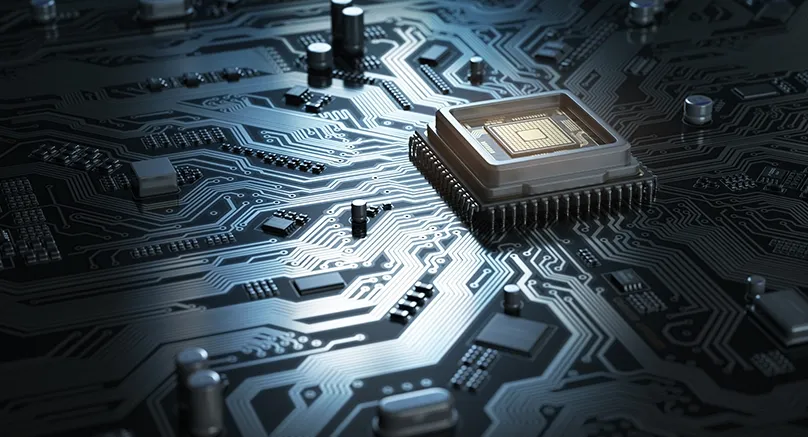
Analog IC Design Lab

Analog IC Design Lab

Introduction

  • The course deals with practical aspects of Analog Integrated Circuits, starting with MOSFET characterization and progressing to major analog building blocks such as operational amplifiers, transconductance amplifiers, advanced biasing circuits, and switched-capacitor circuits.
  • The characterization and performance of linear integrated circuits are verified using powerful EDA tools like Cadence with standard CMOS foundry model files.

Scope of the Lab

  • This course focuses on the analysis and design of Analog CMOS Integrated Circuits, emphasizing both fundamental concepts and emerging paradigms required in today’s semiconductor industry.
  • The objective is to develop a strong foundation and effective methods for analyzing analog circuits by inspection.

MOU for IC Prototyping

  • EUROPRACTICE
  • UMC, TSMC, IHP
  • Semi-Conductor Laboratory (DoS)
  • 180 nanometre CMOS Technology

Applications

  • Voice and Data Communication Networks
  • Processing of Natural Signals
  • Digital Communication Systems
  • Disk Drive Electronics
  • Radio Frequency Communication
  • Optical Receivers
  • Microprocessors and Memories

Click Here


Infrastructure

Design Tool Licenses
Cadence (Research Bundle) 50
Synopsys (Research Bundle) 15
Mentor Graphics 50
Campus

RF & Microwave Engineering Lab

RF & Microwave Engineering Lab

Introduction

  • Microwave engineering is an laws fail. course in where the This as operating at advanced electronics Kirchhoff happens smaller wavelengths will lead to changes in behavior of circuit components with their dimensions.
  • Maxwell equations which are more generalized laws than Kirchhoff laws are used to study, analyze, design and test microwave devices and circuits.

Click Here

Scope of the Lab

  • During the course the student will learn how to use various microwave equipment and components.
  • They will determine and plot the characteristics of Gunn Oscillator, Reflex klystron and other passive microwave components.
  • They will also learn how to use various simulation software to design devices various with characteristics, microwave desired scattering parameters and field patterns.

Simulation Software

  • ANSYS Academic Teaching High Frequency (Perpetual) HFSS
  • CST STUDIO SUITE (Perpetual), Bio models, Antenna magus.
  • AWR Office
  • Console
  • Mathcad
  • OriginPro 2022
  • ADS software

Application Areas

  • Radar
  • Broadband wireless communications
  • Remote sensing
  • Transmission lines
  • Satellite communications.
  • Extraterrestrial communications

Infrastructure

1 MATLAB R2019a
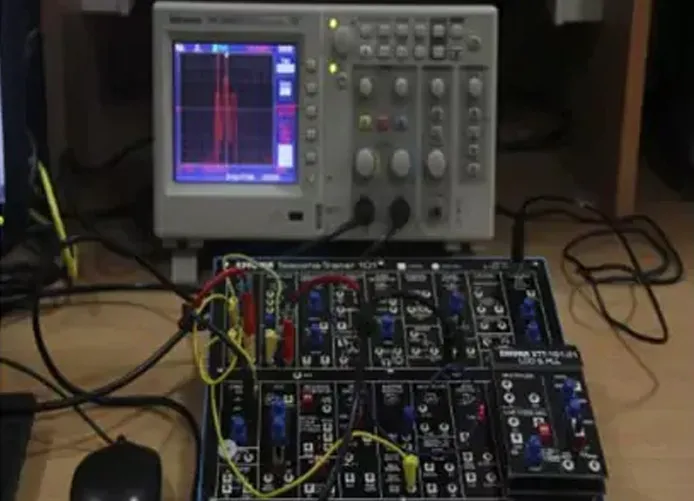
2 Emona Telecom Trainer Kit – 101
3 Digital Storage Oscilloscope (DSO)
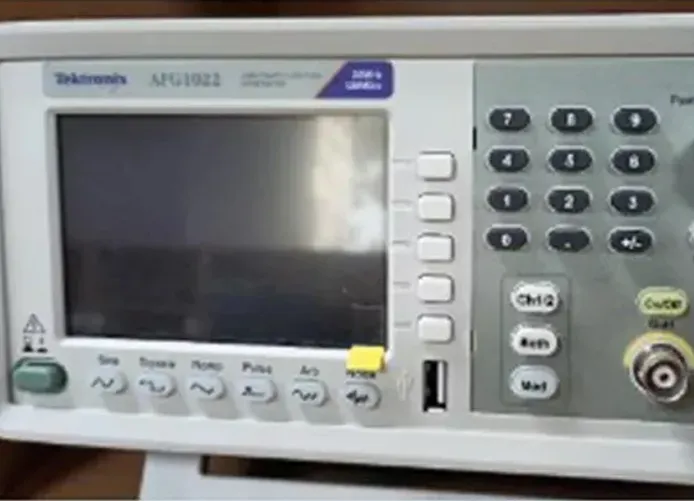
4 Function Generator
5 Lenovo M720 Tower Model Computer

Software’s

Equipments

AMOS
2 Smart PLS
Win-RATS
4 NVivo
5 Stata 17
6 EViews 12
7 Media Lab v2020
8 Direct RT v2020
9 SPSS
10 Commodities (IP)
11 CapEx (IP)
Campus

Signals and Systems Lab

Signals and Systems Lab

In this Lab, the student will acquire hands-on experience with programming in MATLAB. MATLAB will enable you to study and understand the theory behind signals and systems as well as validate the theory with real-word examples. The lab will cover linear time-invariant systems, Fourier series and Fourier transform, sampling, digital filters, along with several accompanying digital signal-processing (DSP) applications.

Click Here

Scope of the Lab

Students will write their own scripts to understand basic signal operations. Symbolic Math Toolbox is also used for Laplace and Z-transforms. Fourier transform and design of digital filter is also done using Signal Processing Toolbox. The Simulink toolbox in MATLAB helps in better visualization of many difficult concepts easily.

Application Areas

  • Signal Processing
  • Digital Filter Design
  • Image processing
  • Video Processing
  • Communication Engineering

Infrastructure

1 MATLAB R2019a
2 Emona Telecom Trainer Kit – 101
3 Digital Storage Oscilloscope (DSO)
4 Function Generator
5 Lenovo M720 Tower Model Computer

Software’s

Equipments

AMOS
2 Smart PLS
Win-RATS
4 NVivo
5 Stata 17
6 EViews 12
7 Media Lab v2020
8 Direct RT v2020
9 SPSS
10 Commodities (IP)
11 CapEx (IP)
Campus

B.E. Electronics & Computer

B.E.

Electronics & Computer


Offered at: Goa Campus

Building Innovators in Electronics and Computing


The B.E. in Electronics & Computer Engineering at BITS Pilani, Goa, is a rigorous and interdisciplinary programme blending key principles of electronics, computer science, and emerging technologies. Students will sharpen their skills in digital systems, microprocessors, software development, and embedded systems, while also developing critical problem-solving and analytical skills, which are important for the current evolving times. The curriculum amalgamates experiential learning in state-of-the-art infrastructure labs, preparing students for industry trends and the future world of work.


Design a Degree That Works for You


At BITS Pilani, your academic path is not Linear. It allow you to customise your learning path
according to your aspirations, goals and interest.

The structure of degree programmes and academic regulations also provides certain other flexibilities like choice of electives, number of electives, repetition of courses, departure from normal pace, withdrawal from or substitution of course(s), etc.

Students interested in exploring courses beyond the scope of their curriculum can opt to audit them. This option is for casual learners who are not enrolled in a degree programme.Courses such as Foreign Languages and Music are offered in addition to the core degree programmes. Students may take these courses on an audit basis, subject to the payment of additional fees.

High-performing students may transfer to:


Higher Degree or Ph.D. programmes


Between Ph.D. and Higher Degree levels (based on academic standing). This flexibility supports seamless progression for research-driven students.

One of the most popular flexibilities offered by our educational structure is the dual degree scheme, under which students concurrently work towards completing two integrated first degrees within a reasonable timeframe. All students admitted to Group B programmes are also eligible to work under this scheme for one of the Group A programmes. Assignments to programmes are made based on individual performance during the first year.


In the assignment of dual degrees, first priority is given to students in Group B seeking a second degree under this scheme from among the programmes in Group A. After fully satisfying the known needs of the first priority, a second operation is done to consider the other priority, namely, students in any group seeking a second degree from amongst the programmes in another group. While it would be academically and procedurally acceptable for a student admitted to Group A or B programmes to seek a second degree in Group C in the dual degree scheme, the reverse process is not normally possible. However, a student admitted to Group C will be eligible to compete for a dual degree in any degree in Group C, or any degree in Group B or MMS, but only in Group A.

Practice School
The Original Experiential Learning Model


The Practice School Programme is a hallmark of BITS Pilani’s experiential learning approach. It provides students with an opportunity to practice what they have learnt in global organisations under the supervision of a mentor. Students work on cutting-edge technologies and have the option to practice in their discipline of study or cross-disciplinary areas. In addition to providing students with an opportunity to play roles that require multifunctional skills, this flagship programme also offers many students the chance to secure a PPO.

Click the edit button to change this HTML

Practice School-I

Practice School I is an eight-week course conducted during the summer term after the second year of study. Students are stationed in an organisation during this programme, and after a comprehensive orientation, students largely learn through observation and work on group projects, under the guidance and mentorship of industry experts and a faculty member from BITS. This not only serves as a first exposure for students to the corporate world but also helps nurture their personality traits, communication, and presentation skills.

Practice School-II

Practice School-II offered in the final year of study is a TWENTY-TWO-week full-time program. First-degree students in their final year of study can register for this program either during the first semester or the second semester, and Dual-Degree students can register for a double-semester PS-II program. For higher degree students, the course is titled Practice School, and such students can register for it in their final semester of study.

Practice School Process

Practice School I is an eight-week course conducted during the summer term after the second year of study. Students are stationed in an organisation during this programme, and after a comprehensive orientation, students largely learn through observation and work on group projects, under the guidance and mentorship of industry experts and a faculty member from BITS. This not only serves as a first exposure for students to the corporate world but also helps nurture their personality traits, communication, and presentation skills.

Programme Structure

Focus: Building strong basics in science, mathematics, and engineering principles

  • BIO F110 - Biology Laboratory
  • BIO F111 - General Biology
  • CHEM F110 - Chemistry Laboratory
  • CHEM F111 - General Chemistry
  • MATH F111 - Mathematics I
  •  
  • PHY F110 - Physics Laboratory
  • PHY F111 - Mechanics, Oscillations & Waves
  • BITS F110 - Engineering Graphics

Focus: Expanding core engineering knowledge and computational skills

  • MATH F211 - Mathematics III
  • Humanities Electives
  • ECOM F213 – Object-Oriented Programming
  • ECOM F214 – Electronic Devices
  • ECOM F215 – Digital Design
  •  
  • ECOM F222 – Discrete Structures for Computer Science

Focus: Advanced topics, electives, and specialisation courses

  • Open/Humanities Electives
  • Discipline Electives
  • ECOM F313 – Analog & Digital VLSI Design
  • ECOM F342 – Computer Architecture
  • ECOM F343 – Communication Networks

Focus: Research, electives, and practice school

  • Open Electives
  • Discipline Electives
  • BITS F221 – Practice School I (Summer term after Year 2, for PS option only)

Master Electronics & Computing with Industry Leaders

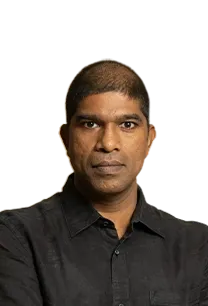
A Amalin Prince


Professor,
Department of EEE
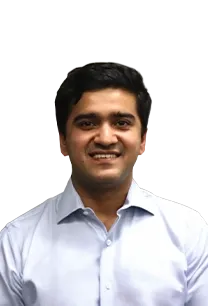
Akshay Madan


Assistant Professor

Anita Bhagirathji Agrawal


Associate Professor

Admissions: Everything You Need to Know


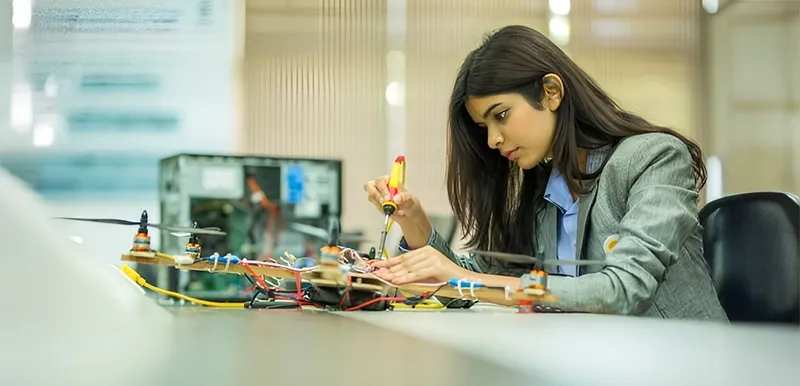
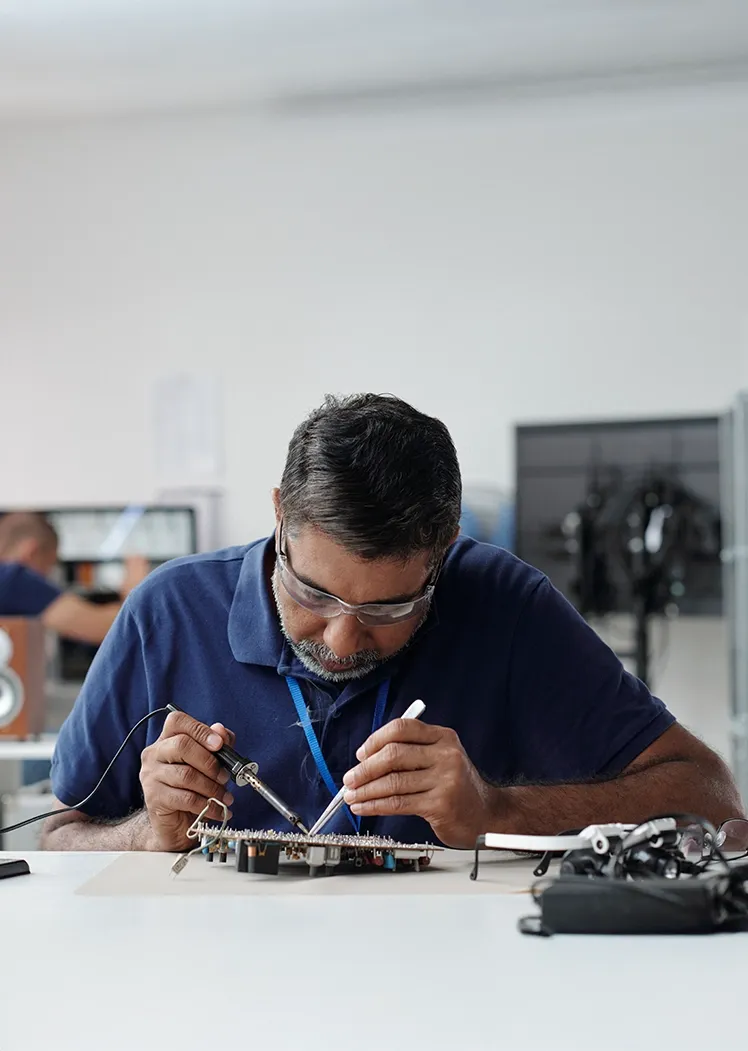
Students work hand-on in specialised, fully equipped facilities.

Admission Process

Eligibility Criteria

Fees & Refund Policy

Scholarship

Education Loan

Important Dates

You Asked.
We Answered.

At BITS Pilani, it is an integrated first degree that amalgamates core electronics with computer science foundations, delivered under the EEE department and structured for 8 semesters (4 years).

Yes. This course combines electronics with computer science. You will learn both hardware design and software development, making it broader than just CSE or EEE.

The curriculum at BITS Pilani begins with a strong foundation in Mathematics, Physics, Programming, Analog & Digital VLSI Design and Digital Design.

Yes. Admission to this programme at BITS Pilani is done via the BITSAT entrance exam conducted by the university.

Yes, you can- BITS Pilani follows a flexible credit-based system, allowing students to accelerate or extend their degree timeline.

You must have completed Class 12 with Physics, Chemistry and Mathematics with a minimum of 75% in three subjects and 60% in each subject.

Yes, BITS Pilani offers a variety of electives in AI/ML, IoT, Robotics, Communication Networks and VLSI in later semesters, depending on your interest.

At BITS Pilani, the course is designed to be completed in four years, which comprises 8 semesters.

At BITS Pilani, students secure average salary packages between ₹12–18 LPA, with top offers going to ₹30+ LPA across global tech and consulting firms.

Graduates are recruited by Google, Microsoft, Intel, Qualcomm, Amazon, Deloitte, Infosys, and Accenture, along with core electronics and semiconductor leaders. BITS Pilani’s 90%+ placement rate and global alumni network further strengthen career prospects.

Program Type
Content Type
Degree

BE Electrical and Electronics

B.E.

Electrical and Electronics


Offered at: Pilani, K K Birla Goa, Hyderabad

Engineer Solutions for a Sustainable and Connected Future


The EEE Department was formed by merging the then-existing Electrical Engineering and Electronics Engineering departments in 1969-70. The B.E. Electrical and Electronics programme prepares students to tackle some of the most challenging problems in power systems, control engineering, embedded systems, and renewable energy. BITS Pilani has a culture of innovation that provides graduates with the skills to pursue career paths in engineering, research, entrepreneurship, and employment, in India and around the world.


Design a Degree That Works for You


At BITS Pilani, your academic path is not Linear. It allow you to customise your learning path
according to your aspirations, goals and interest.

The structure of degree programmes and academic regulations also provides certain other flexibilities like choice of electives, number of electives, repetition of courses, departure from normal pace, withdrawal from or substitution of course(s), etc.

Students interested in exploring courses beyond the scope of their curriculum can opt to audit them. This option is for casual learners who are not enrolled in a degree programme.Courses such as Foreign Languages and Music are offered in addition to the core degree programmes. Students may take these courses on an audit basis, subject to the payment of additional fees.

High-performing students may transfer to:


Higher Degree or Ph.D. programmes


Between Ph.D. and Higher Degree levels (based on academic standing). This flexibility supports seamless progression for research-driven students.

One of the most popular flexibilities offered by our educational structure is the dual degree scheme, under which students concurrently work towards completing two integrated first degrees within a reasonable timeframe. All students admitted to Group B programmes are also eligible to work under this scheme for one of the Group A programmes. Assignments to programmes are made based on individual performance during the first year.


In the assignment of dual degrees, first priority is given to students in Group B seeking a second degree under this scheme from among the programmes in Group A. After fully satisfying the known needs of the first priority, a second operation is done to consider the other priority, namely, students in any group seeking a second degree from amongst the programmes in another group. While it would be academically and procedurally acceptable for a student admitted to Group A or B programmes to seek a second degree in Group C in the dual degree scheme, the reverse process is not normally possible. However, a student admitted to Group C will be eligible to compete for a dual degree in any degree in Group C, or any degree in Group B or MMS, but only in Group A.

Practice School
The Original Experiential Learning Model


The Practice School Programme is a hallmark of BITS Pilani’s experiential learning approach. It provides students with an opportunity to practice what they have learnt in global organisations under the supervision of a mentor. Students work on cutting-edge technologies and have the option to practice in their discipline of study or cross-disciplinary areas. In addition to providing students with an opportunity to play roles that require multifunctional skills, this flagship programme also offers many students the chance to secure a PPO.

Click the edit button to change this HTML

Practice School-I

Practice School I is an eight-week course conducted during the summer term after the second year of study. Students are stationed in an organisation during this programme, and after a comprehensive orientation, students largely learn through observation and work on group projects, under the guidance and mentorship of industry experts and a faculty member from BITS. This not only serves as a first exposure for students to the corporate world but also helps nurture their personality traits, communication, and presentation skills.

Practice School-II

Practice School-II offered in the final year of study is a TWENTY-TWO-week full-time program. First-degree students in their final year of study can register for this program either during the first semester or the second semester, and Dual-Degree students can register for a double-semester PS-II program. For higher degree students, the course is titled Practice School, and such students can register for it in their final semester of study.

Practice School Process

Practice School I is an eight-week course conducted during the summer term after the second year of study. Students are stationed in an organisation during this programme, and after a comprehensive orientation, students largely learn through observation and work on group projects, under the guidance and mentorship of industry experts and a faculty member from BITS. This not only serves as a first exposure for students to the corporate world but also helps nurture their personality traits, communication, and presentation skills.

Programme Structure

  • Biology Laboratory
  • General Biology
  • Chemistry Laboratory
  • General Chemistry
  • Mathematics I
  • Physics Laboratory
  • Mechanics, Oscillations & Waves
  • Engineering Graphics

  • Mathematics III
  • Open/Humanities Electives
  • Electrical Machines
  • Electromagnetic Theory
  • Digital Design
  • Electronic Devices

  • Open/Humanities Electives
  • Communication Systems
  • Optimization
  • Engineering Optimization
  • Analog & Digital VLSI Design
  • Discipline Electives

  • Open Electives
  • Discipline Electives

Learn from Those Driving the Next
Wave of Technology

A Amalin Prince


Professor,

Department of EEE

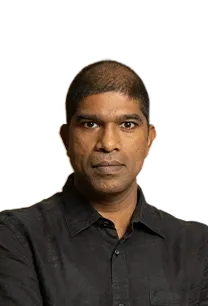
Akshay Madan


Assistant Professor,

Department of EEE
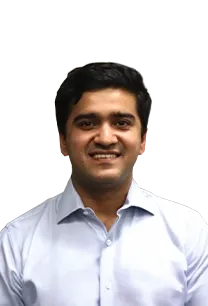
Anita Bhagirathji Agrawal


Associate Professor,

Department of EEE
Admissions: Everything You Need to Know


Students work hand-on in specialised, fully equipped facilities.

Admission Process

Eligibility Criteria

Fees & Refund Policy

Scholarship

Education Loan

Important Dates

You Asked.
We Answered.

At BITS Pilani, the B.E. Electrical & Electronics is known for building a strong base in circuits, signals, control, power systems, electronics and embedded/VLSI- balanced with practical labs and electives.

The B.E. Electrical & Electronics spans 4 years and is an Integrated First Degree at BITS Pilani, with Practice School internships embedded into the programme.

EEE graduates from BITS Pilani enter power, electronics design, VLSI, communications, automation as well as analytics and software roles.

EEE labs at BITS Pilani list industry tools (e.g., Cadence/Mentor/Synopsys) and specialised equipment for power, RF and microelectronics- used in coursework and projects.

Well, of course you can. You get the option to pursue MS/PhD in power systems, microelectronics/VLSI, communications/RF, control/robotics, embedded systems and related domains.

Engineer salaries range from ₹1.5 to 9.2 Lakhs. It also varies by factors such as "which role", preferred skills, company policy, industry, how much experience and the location.

BITS Pilani offers the programme at its Pilani, K K Birla Goa, Hyderabad and Dubai campuses.

At BITS Pilani, placements consistently exceed the 90% record. EEE students generally secure roles across various sectors that are the energy, electronics design, VLSI, communications, automation, consulting and software.

You need to cross the 75 percent aggregate in PCM and 60 percent in each subject for admission in B.E. programmes at BITS Pilani. Admission is done through the "BITSAT" entrance exam.

At BITS Pilani, you will study core subjects- Signals and Systems, Electromagnetics, Digital Design, Communication Systems, Power Electronics and Analog & Digital VLSI Design.

Program Type
Content Type
Degree